What Only The Tailor Will Know
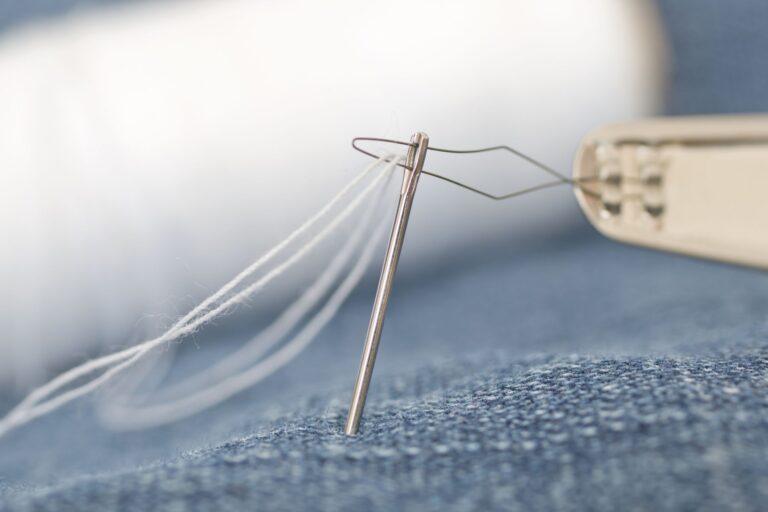
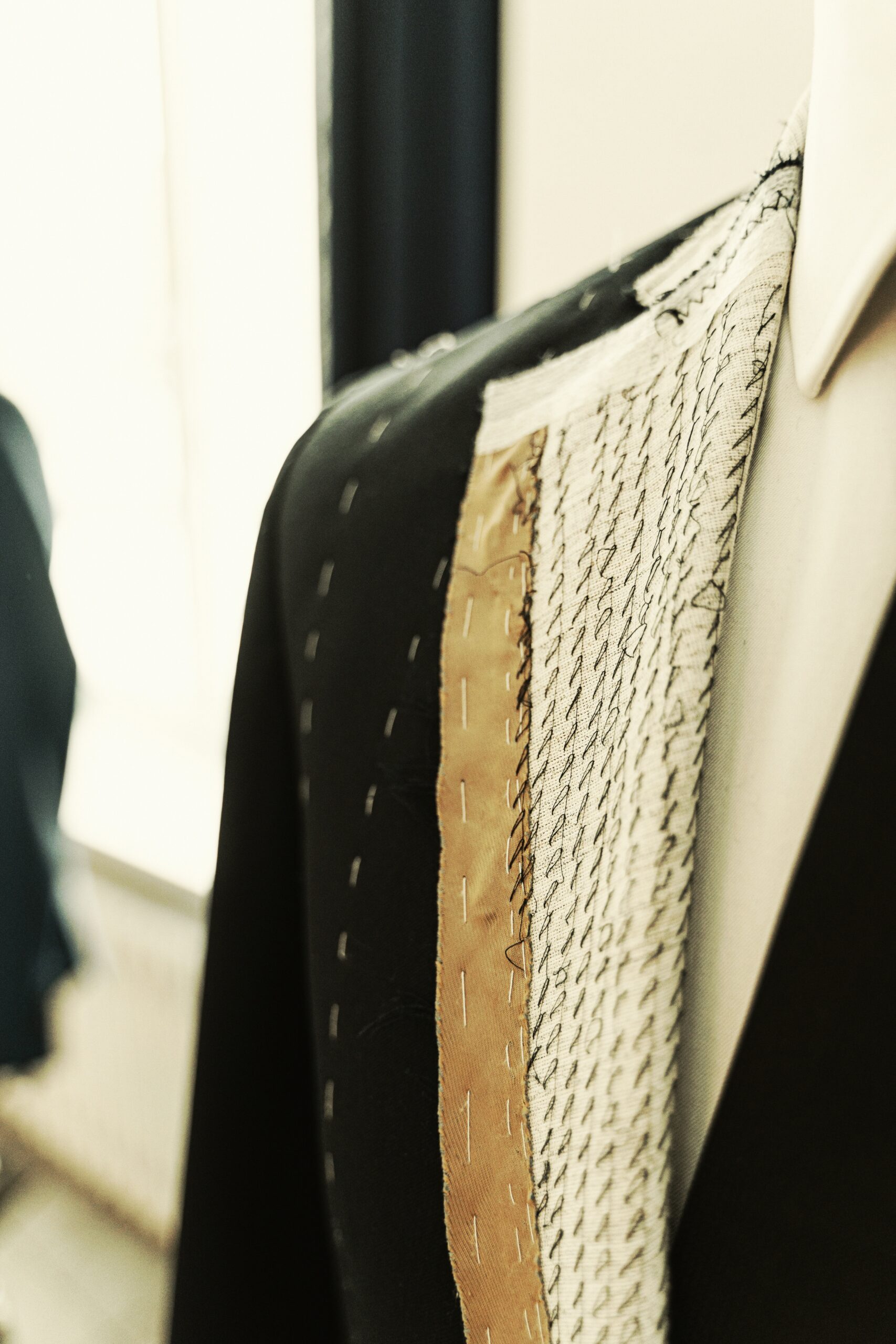
At some point during the making of a Chittleborough & Morgan jacket, before the lining goes in and the whole thing is closed up for good, there is a moment when the inside of the garment is still visible. The canvas — a layered structure of linen, horsehair and wool that gives the jacket its shape and allows it to move — is being padded. Small, even stitches, worked by hand across the entire front panel, anchoring the canvas to the cloth above it. Row after row, each one placed with a precision that takes years to learn and a patience that is simply a condition of the work.
Those stitches are done in purple, white, and green.
Suffragette colors.
They will be there when the client comes in for their fitting. They might notice. They might not. And once the lining is sewn in — once the jacket is finished and handed over and taken home and hung in a wardrobe — those stitches will never be seen again. Not by the client. Not by anyone. They will exist, from that point on, entirely in the dark.
A floating canvas is what separates a bespoke suit from almost everything else available in the world today. It is a fabric panel — traditionally horsehair woven with linen or wool — hand stitched loosely inside the front of a jacket, between the outer cloth and the inner lining. The stitching that holds it in place is called a pad stitch. It is not glued. It is not fused with heat. It floats — anchored lightly enough that it can move with the body, breathe with the cloth, and over years of wearing, gradually take on the shape of the person inside it. A well-made canvas, in a jacket worn regularly, develops a kind of memory. It learns how you stand. How you carry your shoulders. Where your chest is fullest. It becomes, over time, a record of you.
At Chittleborough & Morgan, the intensity of the canvas work is part of what defines the house. Joe Morgan, who has been working at number 12 Savile Row since the days of Tommy Nutter, has spent decades developing a canvas construction that is more extensive, more layered, and more labour-intensive than almost anywhere else on the Row. The make is superb — approaching the French masters at Cifonelli and Camps de Luca. The pockets are tacked to the inside of the jacket by hand. The side panels of the lining are hand stitched. Even the inside-leg seam of the trousers is overlocked by hand — a long, straight edge that any other tailor would send to a machine, but which Morgan does by hand because the speed of machine overlocking can cause the line of the trouser to be ever-so-slightly kinked.
This is the level of attention being paid to things that cannot be seen.
The Suffragette colors are not an accident or an affectation. They are a choice — made deliberately, repeated on every jacket, for every client, without exception. Purple for dignity. White for purity. Green for hope. The movement that argued, at considerable personal cost, that women deserved to be treated as full human beings. Those values, stitched into the hidden interior of a garment. Present whether anyone knows it or not.
There is something in that worth sitting with. The person who buys a Chittleborough & Morgan jacket is not buying the hidden stitching. They will never see it again. It cannot be shown to anyone, cannot be used to impress anyone, cannot be photographed or shared or pointed to. It exists, from the moment the lining closes, entirely as a private fact about the jacket. A thing that is true about it that only the people who made it will ever fully know.
And yet it is there. Every time. Done properly. In the right colors. For reasons that have nothing to do with whether anyone is watching.
This is what the very best of this tradition has always been about. Not the visible excellence — the drape, the silhouette, the cut of the lapel — though all of that is present too. The invisible excellence. The standard held in the dark. The decision, made again and again in a workroom on Savile Row, to do the hidden thing completely rather than adequately, because the work deserves it regardless of whether the work will ever be seen.
The jacket knows. The tailor knows. And somewhere inside the cloth, in purple and white and green, the stitching holds.
Marlowe