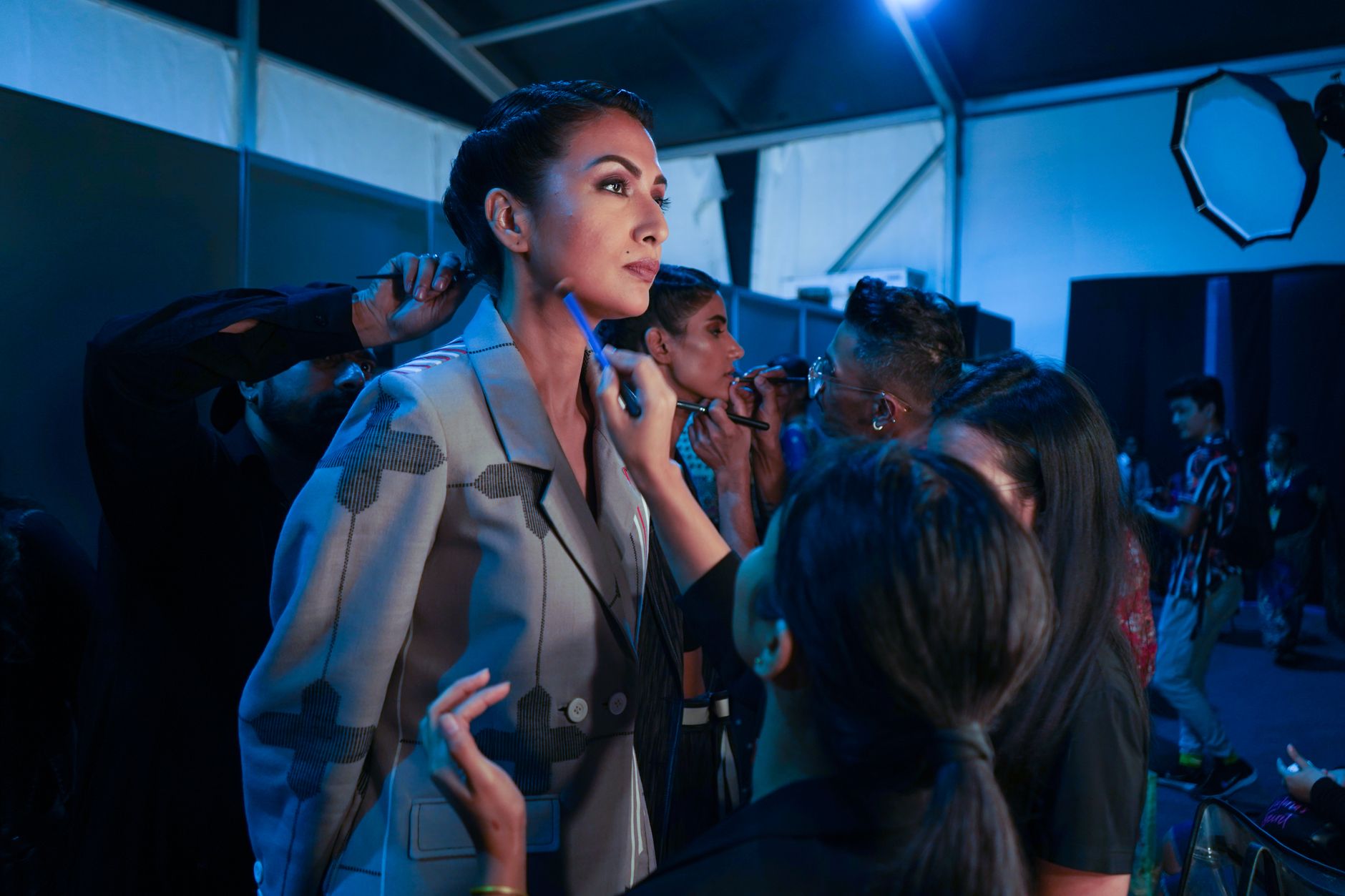
Seen and Worn
On the two things a garment has to do — and what happens when it only does one of them
Have you noticed something about the clothes that get the most attention lately?
Not the ones that feel best. The ones that photograph best. The ones that read clearly at thumbnail size, that hold their silhouette in flat lay, that produce a color that pops against a white background or a neutral wall. The ones that were, at some level of the design process, considered through the lens of how they would perform on a screen.
This is not a criticism. A garment that reads well — that communicates clearly, that carries its intention across a photograph — is doing something real and important. Visual function is not a distraction from the work of making clothes. It is part of the work. It always has been.
What is worth paying attention to is when the two functions — the seen and the worn — stop talking to each other.
Clothing has always had two functions. The physical — how it moves, breathes, fits, feels, holds up over time, behaves on a real body doing real things in real conditions. And the visual — how it reads, signals, communicates, positions the wearer in relation to the world watching.
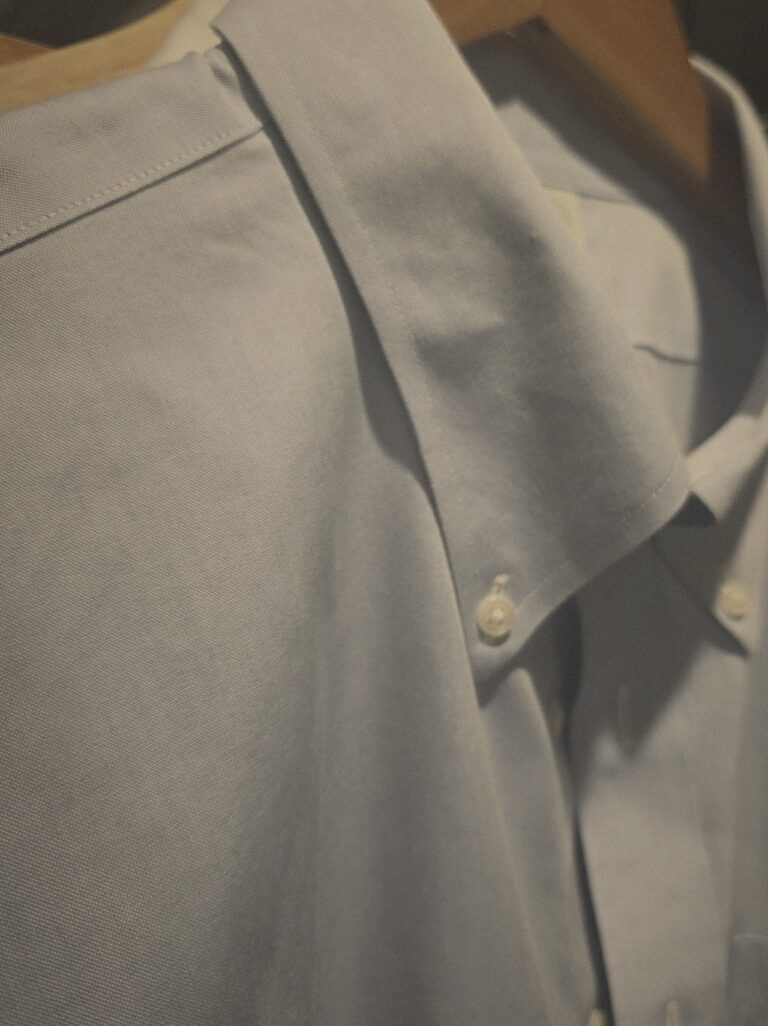
These two functions have always existed in conversation. At their best, they are inseparable. The spalla camicia that moves beautifully at the shoulder is also, to the eye that knows what it is looking at, extraordinarily elegant to look at. The Sea Island cotton that feels unlike anything else against the skin has a luster in natural light that no synthetic has ever convincingly replicated. The floating canvas that nobody will ever see gives the jacket a drape that everyone will notice without knowing why.
Physical function, done properly, tends to produce visual beauty as a natural consequence. Visual beauty, pursued honestly, tends to demand physical integrity as its foundation. The two are not opposites. They are, at their best, the same thing approached from different directions.
The interesting question is what happens when they are treated as separate briefs. When the visual is optimized independently of the physical. Or — less commonly discussed — when the physical is pursued without consideration for how the garment communicates in the world.
The structured shoulder is worth considering here, because it illustrates the tension clearly.
In its proper form — the British roped shoulder — it is a construction decision made in service of specific outcomes on both dimensions simultaneously. Physically, it holds its shape, carries the body, creates a silhouette that reads with authority whether the wearer is standing still or in motion. Visually, it produces a clean, defined line that communicates formality, intention, a certain kind of seriousness. The visual and the physical are aligned. The shoulder looks the way it does because it works the way it works.
The problem arrives when the visual outcome is pursued without the physical one. When a shoulder is structured because it photographs well rather than because the garment or the wearer needs it to be structured. The shoulder reads correctly on screen. On the body it restricts, pulls, reminds the wearer at every raised arm that the jacket was designed for a different purpose than the one they are using it for.
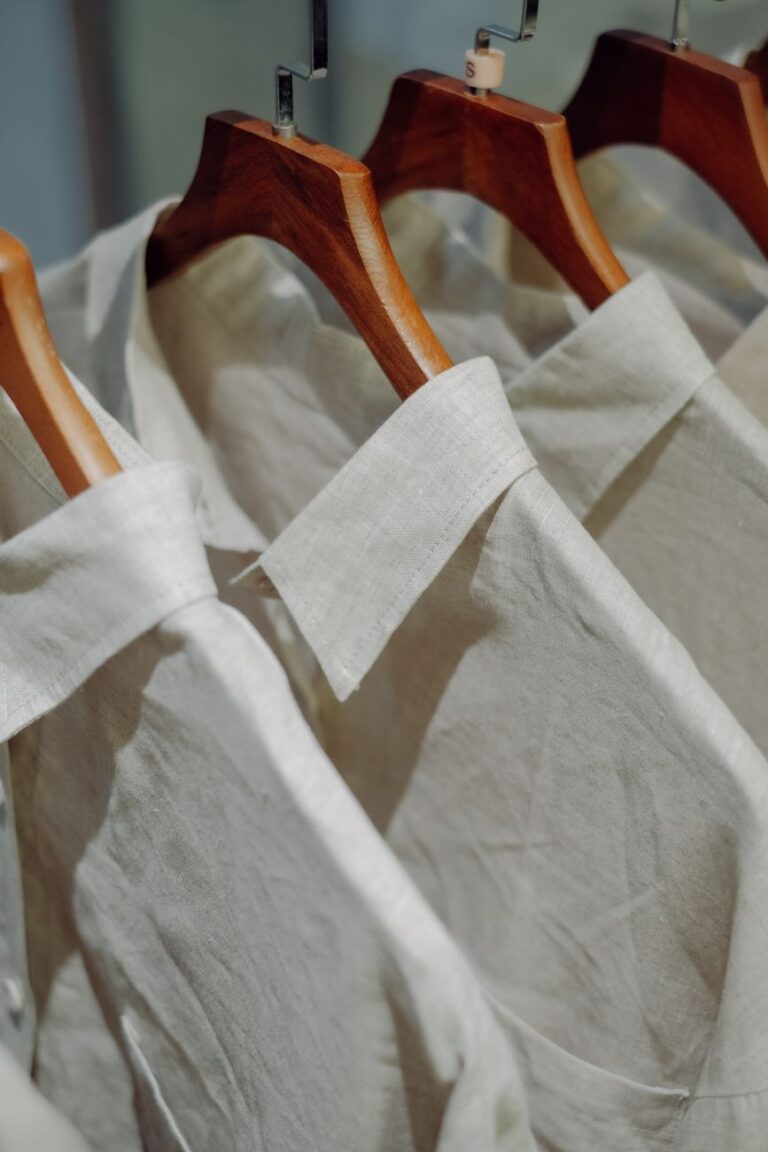
The reverse failure exists too. A shoulder built for pure physical ease — the spalla camicia, the Neapolitan shirt shoulder — that photographs as noise. The grinze that reads as imperfection on screen while feeling extraordinary on the body. The visual function underserved, which means the garment is harder to sell, harder to find, less present in the conversation than its physical quality warrants.
Both failures are real. The brief needs to hold both.
Fabric is where this becomes most visible, if you know what to look for.
There is a category of fabric that behaves beautifully in still photography and loses something the moment a body is inside it. It hangs with liquid precision in the product shot. It drapes in a way that suggests a life of effortless elegance. And then it arrives and you put it on and something is slightly wrong that you cannot immediately name — a weightlessness, a tendency to shift, a quality of impermanence that the photograph never suggested.
The fabric was selected for the visual brief. It delivered on that brief honestly. What it could not do was hold the same quality on a body in motion, in real light, across the length of an actual day. The physical brief was never fully written.
But consider the opposite. A fabric with extraordinary physical qualities — the weight of Sea Island cotton, the warmth of Harris Tweed, the drape of a properly floating canvas — that is never seen because nobody knows how to show it. The physical brief was fully served. The visual brief was abandoned. The garment exists in the world without the language to communicate what it is.
The finest cloths deserve to be shown as well as they perform. The visual function of a garment is part of how it reaches the person it was made for. Ignoring it is not a mark of integrity. It is a missed opportunity.
What social media changed is not the existence of visual function — that has always mattered — but the scale and the speed at which visual performance is evaluated. The number of visual assessments a garment undergoes before it reaches a body has multiplied enormously. The feedback between visual success and commercial success has tightened to the point where they are almost indistinguishable.
This is not inherently wrong. It is simply a new condition. One that the best makers are learning to work within rather than against — finding ways to show the physical quality of their work visually, to make the drape legible in a photograph, to communicate what the grinze means rather than hiding it.
The makers who do this well are doing something genuinely difficult. They are serving both briefs simultaneously, without letting either one compromise the other. The garment that moves well and reads well. That feels right on the body and looks right on the screen. That was designed for the person wearing it and for the world watching.
That is the whole brief. Not the visual brief. Not the physical brief. Both, held together, neither one colonizing the other.
The sequence still matters, though. And this is the quiet conviction underneath everything Marlowe has been thinking about.
Body first. Then screen.
Not because the visual is lesser — it is not. But because a garment that starts from the body and works outward tends to produce visual qualities that are real, earned, and legible in the way that only genuine things are legible. The drape comes from the fabric. The silhouette comes from the cut. The ease comes from the construction. And all of it — when shown honestly, in real light, on a real body — communicates something that a garment designed in the opposite direction never quite manages.
You feel the difference the moment you put it on.
And when the photograph is taken — in honest light, on a body that is actually wearing the thing rather than displaying it — you see it too.
Both at once. That is what a garment is supposed to do.
Marlowe.