The Button That Ruins Everything
On the second button of every dress shirt, and the small daily compromise nobody talks about
You know the one.
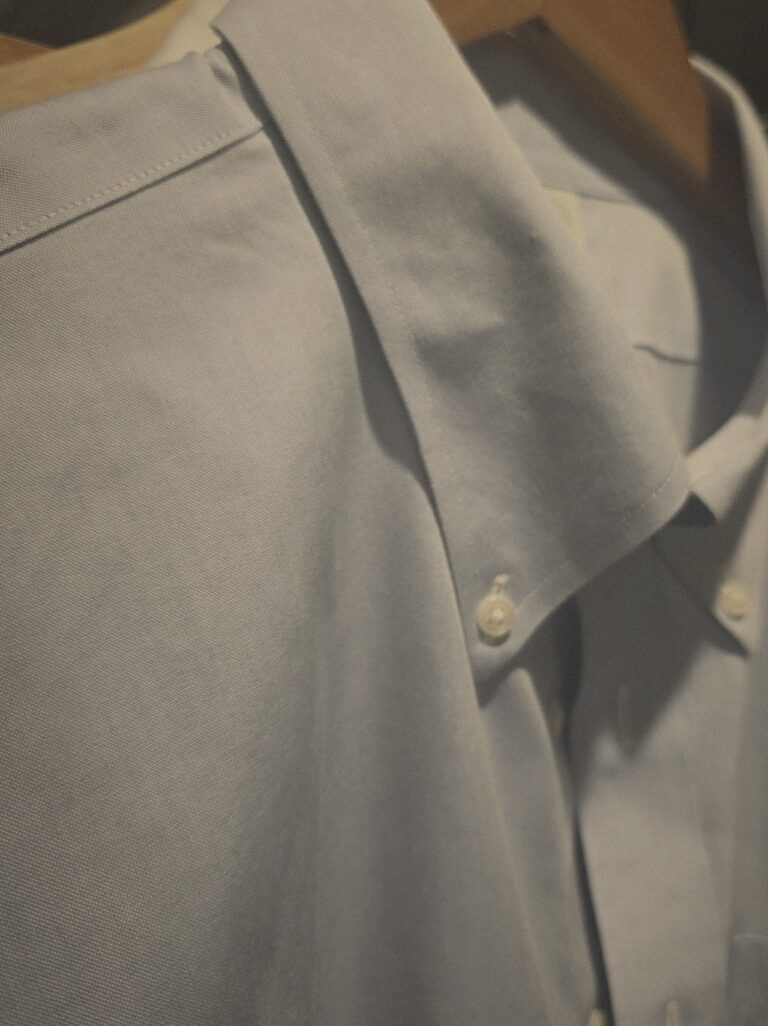
Not the top button — that one has its own well-documented issues and a whole separate conversation waiting. Not the third, which sits at a sensible latitude and has largely kept itself out of trouble. The second button. The one that sits with what can only be described as aggressive optimism about where your collarbone is and what you might want to do with it.
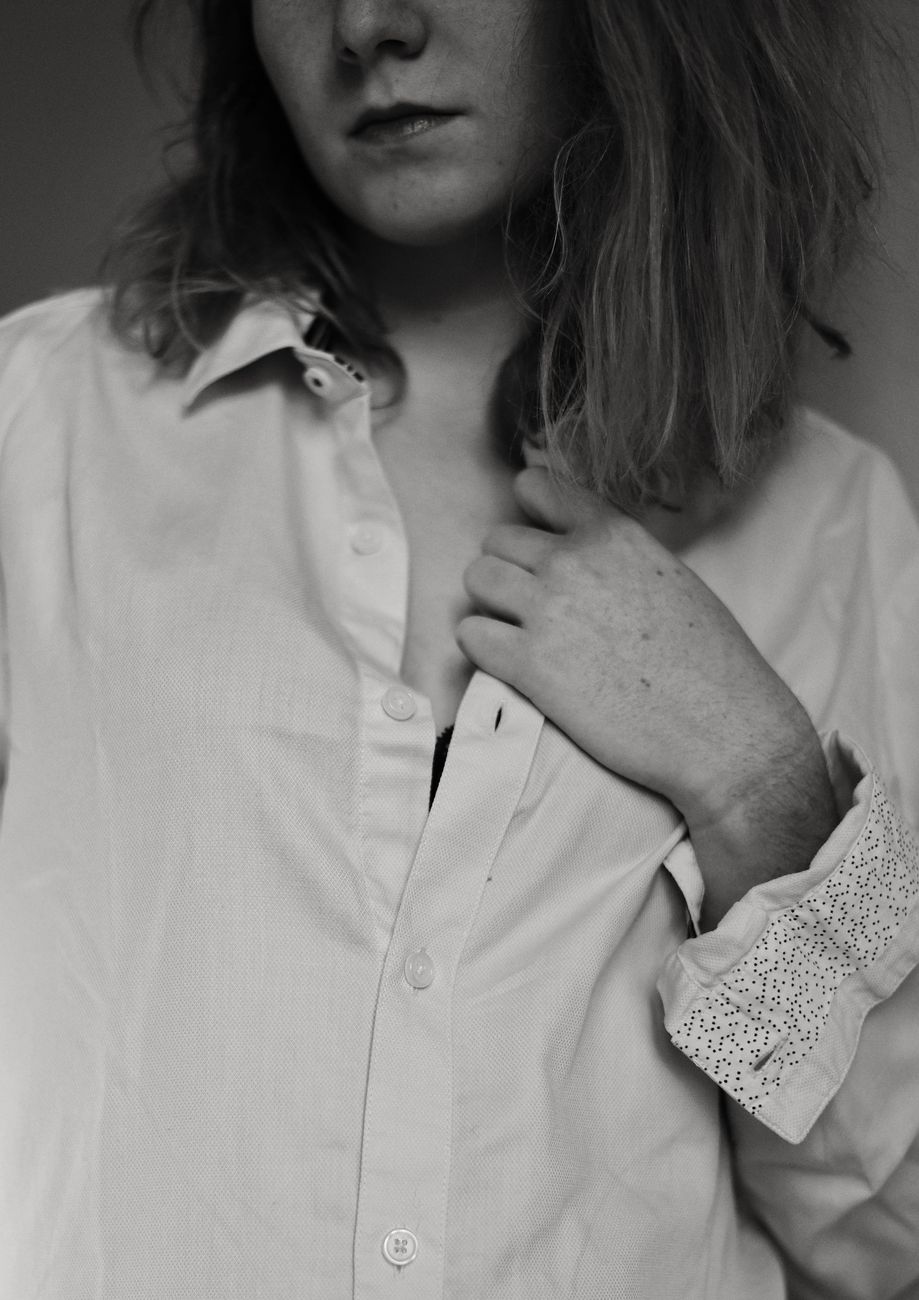
Button it and something tightens. Not dramatically — just enough. Just enough that the morning starts with a small negotiation between you and your shirt that you did not ask for and cannot quite win. Unbutton it and the gap is wider than casual, narrower than deliberate — not the clean open collar of a woman who knows exactly what she’s doing, but something that reads as interrupted. As if you started getting dressed and then got a phone call.
There is no configuration in which this resolves itself neatly. There is no third option. And yet every morning, in front of every mirror, in every city, women who wear dress shirts make this small, familiar, unsatisfying choice and say nothing about it because there has never been anywhere useful to direct the complaint.
Until now.
The second button is positioned where the collar ends and the shirt begins — the boundary between structure and drape, between the part of the garment that was designed with genuine intention and the part that was designed, more or less, to cover everything below it. On most shirts this placement was decided once, at some point, by someone working from a template that has been adjusted incrementally over decades without being fundamentally reconsidered.
The collar was considered. The cuffs were considered. The placket, the yoke, the side seams — all considered. The distance between the first and second button: less so. It falls where it falls, governed by a logic of proportion that works adequately for a range of bodies in a range of situations and is correct for almost none of them specifically.
This is not carelessness exactly. It is the mathematics of making something for everyone — which is another way of saying making something perfectly for no one. The second button placement that pulls slightly too high on one woman and gaps slightly too wide on another is the placement that offends the fewest people across the largest production run. It is an optimization for the median. The median, as anyone who has ever stood at a mirror knows, is not where you live.
There is something particular about this frustration as it applies to women’s shirting — which is that the dress shirt was not originally designed for women at all, and the adjustments made to accommodate women’s bodies over the decades have been, in the main, cosmetic. Darts added. Fabric taken in at the waist. Buttons moved to the other side. The fundamental architecture — the collar geometry, the placket structure, the button placement logic — borrowed wholesale from a garment built for a different body and a different set of proportions and declared close enough.
Close enough is not the same as right.
The specific problem of the second button on a woman’s dress shirt is that the distance between the collar band and the chest is not the same distance as on a man’s shirt, for reasons that are both obvious and apparently easy to overlook. Which means a button placement inherited from one template and applied to another produces, reliably, the choice: slightly suffocating or slightly unresolved. Every morning. In perpetuity.
This is a solvable problem. Collar band height, button spacing, the relationship between the second button and the bottom of the collar band — these are variables, not fixed laws. They are decisions someone made and someone else could make differently.
It requires looking at where the button is and asking whether it should be somewhere else. For this body. For this collar. For the specific moment when someone is standing at a mirror deciding how to meet the day and would very much like her shirt to be on her side.
Some things about the dress shirt are worth preserving entirely. The architecture, the structure, the particular authority a well-made shirt gives the person wearing it — all of that is worth keeping.
The second button placement is not one of those things.
Marlowe.