That Second
On the pause nobody talks about — and what it actually means
You know the one.
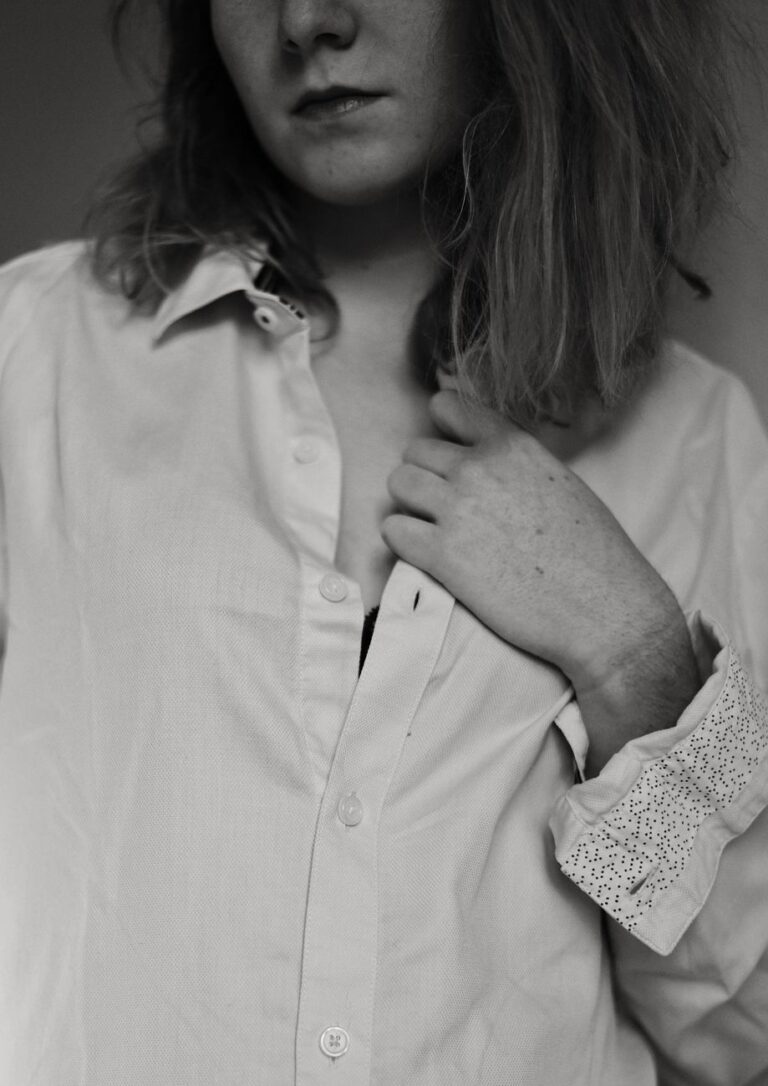
Not the getting dressed part. Not the choosing or the buttoning or the checking that everything is in order. The moment after all of that. The two, maybe three seconds — sometimes five if it’s a particularly good morning — when you stop. When something in you goes quiet and still and you look at yourself, in the mirror or just in the feeling of the thing on your body, and something registers.
Not loudly. Not dramatically. Just — yes. That.
And then you leave the house.
We do not talk about this moment. It exists in the same category as other small private pleasures that feel somehow too personal to mention — the satisfaction of a made bed, the specific comfort of a familiar mug, the way a good pen feels different from a cheap one the moment it touches paper. We know these things matter. We do not generally announce them.
But that pause, specifically — the one in front of the mirror or just inside the feeling of something worn well — is worth naming. Because it is not nothing. It is, in its quiet way, everything the act of getting dressed is actually for.
What is happening in that moment, physiologically, is interesting without being complicated.
Your brain’s reward system — the same circuitry that registers a good meal, a solved problem, a moment of genuine connection — fires a small, clean signal. Not the dramatic rush of adrenaline. Something quieter. A mild release of dopamine and serotonin, working together, that registers as a kind of rightness. A settling. The neurological equivalent of a deep breath.
Researchers who study what they call enclothed cognition — the effect of clothing on thought and behavior — have found that wearing something that carries meaning to you does not just change how you feel. It changes how you think. Your attention sharpens slightly. Your confidence in your own judgment increases. The effect is real and measurable and begins, specifically, in the moment of recognition. The moment you look and something in you says: yes.
That pause is not vanity. Vanity is about the other — about the audience, the approval, the impression made on the room you are about to walk into. That pause is entirely yours. Nobody else is there. Nobody else is being considered. It is the most private form of self-knowledge a person can have — the body telling the mind that something is right, in the specific way that only the body can tell you, before the day has had any say in the matter at all.
We have been taught, most of us, to be slightly embarrassed by this moment.
The culture around getting dressed — particularly for women, particularly around anything that involves looking at yourself with satisfaction — carries a persistent suggestion that caring about how you look is shallow. That the pause in front of the mirror is vanity. That the pleasure of a well-chosen garment is a lesser pleasure than other kinds. That real depth, real substance, real seriousness, should be indifferent to such things.
This is, with respect, complete nonsense.
The person who stands in front of the mirror for two seconds and feels something register — who has chosen, deliberately, something that fits and feels right and carries the right weight for the day ahead — is not being shallow. They are being precise. They are attending to the instrument they will use for everything else the day requires. They are, in the most literal sense, preparing.
The pause is not self-admiration. It is self-confirmation. The difference matters.
There is a specific quality to that moment when the garment is right — when what you are wearing was actually made for your body, or chosen with enough care that it behaves as if it was. It feels different from the moments when you grabbed the nearest thing or settled for close enough.
It is not louder. It is more settled. The pause is quieter, actually — less of a conscious noticing and more of an absence of friction. The garment is not drawing attention to itself. It is simply there, in the right way, doing what it is supposed to do, and your body registers this as a kind of ease that is different from ordinary comfort.
This is what all of it — the fabric chosen carefully, the construction done properly, the measurement taken from your body rather than a median — is ultimately in service of. Not the garment. Not the mirror. That two-second moment of stillness before you go out into the day.
That pause is the whole point.
I want to say something directly, in case it has not already been said clearly enough.
That moment you have — the one where you look and something in you goes still for a second — is not a small thing. It is not vanity. It is not superficiality dressed up as self-care. It is a moment of genuine self-knowledge. Of the body confirming what the choosing already knew. Of something being right in a world that spends considerable energy making things feel slightly wrong.
You are allowed to have it. You are allowed to stand there for three seconds and let it register. You are allowed to leave the house carrying that feeling rather than immediately second-guessing it.
I know you do this. I do it too. We all do — anyone who has ever put on something that fits the way things are supposed to fit and looked in the mirror and felt, briefly and privately, that the day is already slightly more in their favor than it was a moment ago.
That is not nothing.
That is, in fact, a very good way to begin.
Marlowe