Year Five
(5 Minutes)
I was hanging up a shirt this evening when I noticed how soft the collar had become. I’ve had it about five years.
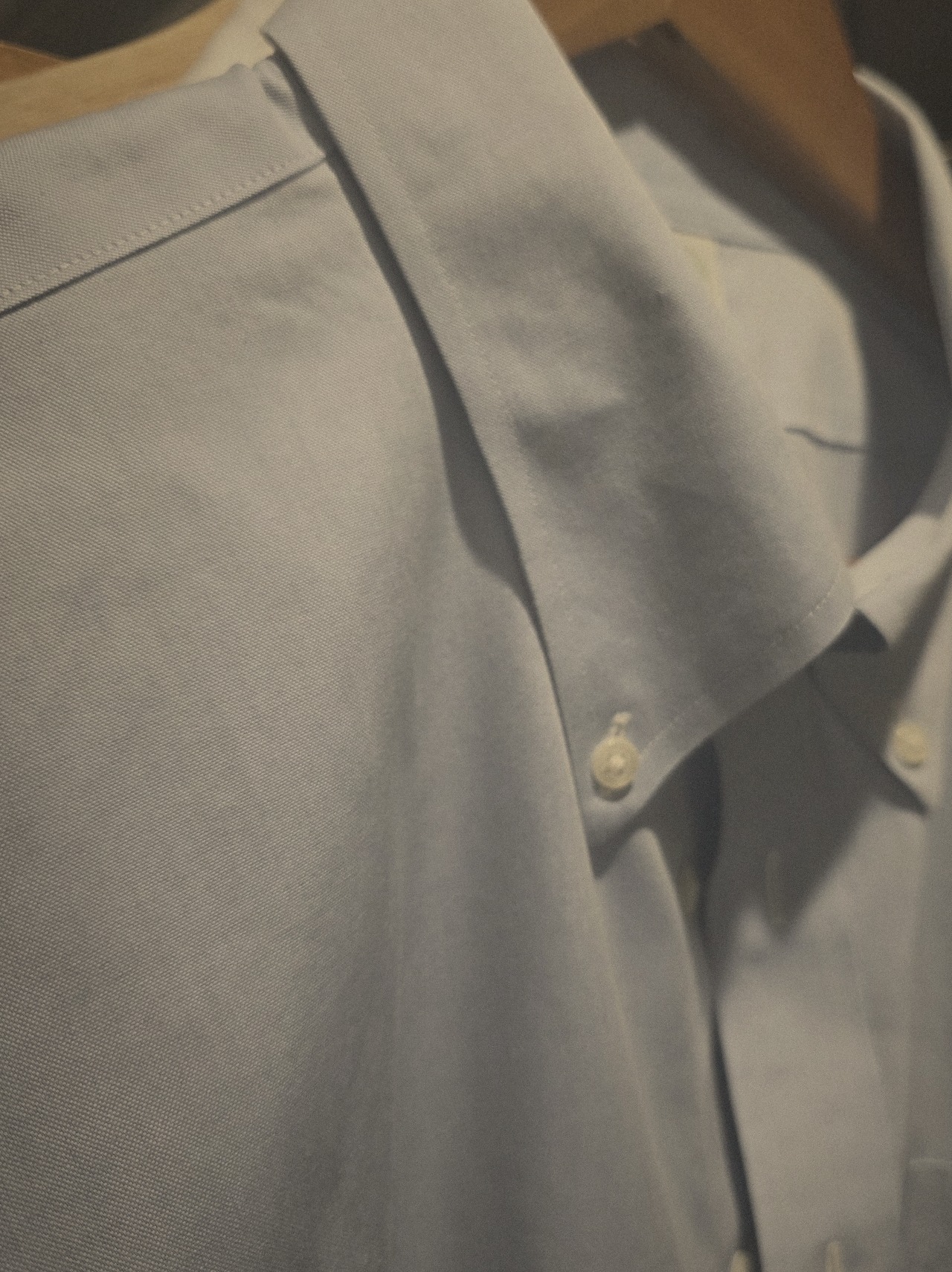
It’s an oxford button-down, blue, the kind most men have owned at least one of. I’ve had it a long time. The cloth has given up the stiffness it arrived with and settled into something closer to a well-washed handkerchief.The collar points have softened where they fold, the edges just beginning to show their age. When I button it, the collar rolls exactly the way it should, an easy curve that no new shirt has ever managed on its first day.
It’s my favourite shirt. It may also be the oldest thing I wear. That isn’t a coincidence.
The button-down collar has a simple origin. At the end of the nineteenth century, an American shirtmaker visiting England noticed polo players buttoning their collar points to their shirts so they wouldn’t flap in their faces mid-gallop. He brought the idea home in 1896, and for most of the century since, the shirt has belonged to men: schoolboys and professors, bankers on weekends, fathers whose sons eventually take the old shirts from their closets.
What made it last isn’t the collar. It’s the cloth. Oxford is woven loosely, with a slight basket texture, and that weave was built to break in rather than break down. Each wash softens it a little. Each year it moves a little more like its owner. The collar slowly learns its roll. The cuff on the watch hand wears paler than the other. Eventually, sometime after the first few years, the shirt reaches a point where it is simply better than it was when it was new.
Most men who own one know this without ever saying it. The best shirt in the closet is rarely the newest. It’s the one that has been through enough to become yours.
Most of the clothes made for women work the other way.
They’re designed to look their best on the first day: crisp, sharp, exactly as they appeared on the rail. From there, it’s mostly downhill. The fabric thins rather than softens. The shape gives way rather than settles in. Within a season or two the piece has been retired, not because she stopped loving it, but because it stopped being what it was.
It’s a quiet difference, and an important one. A garment that peaks on day one asks to be replaced. A garment that peaks in year five asks to be kept.
So imagine it the other way.
Imagine a shirt she bought without much ceremony, years ago now. At first it was a little stiff and a little formal, like a new pair of shoes. She wore it anyway, to the office and on weekends, with the sleeves rolled to the forearm, through a move and a promotion and a long winter. Somewhere along the way it changed. The cloth softened. The collar stopped standing to attention and started sitting the way she likes. The cuff on her watch hand faded a shade lighter than the other.
Now it’s the first thing she reaches for on a difficult morning. Not because it’s impressive, but because it already knows her. It doesn’t need to be managed. It just fits, in the way only time can make something fit.
Nobody across the room would notice anything special about it. She would notice if it were gone.
That’s what the oldest shirt in the closet offers. Not newness, not the thrill of the first wear, but something slower and more lasting: a garment that has been on the same journey as you, and is better for it.
It’s a modest kind of luxury. It doesn’t photograph well on day one. It takes years to show what it is.
But it may be the most valuable thing a piece of clothing can give. A man gets to have it every time he reaches into his closet for the soft blue shirt with the frayed collar.
She should have a year five too.
Marlowe