Before The Orb
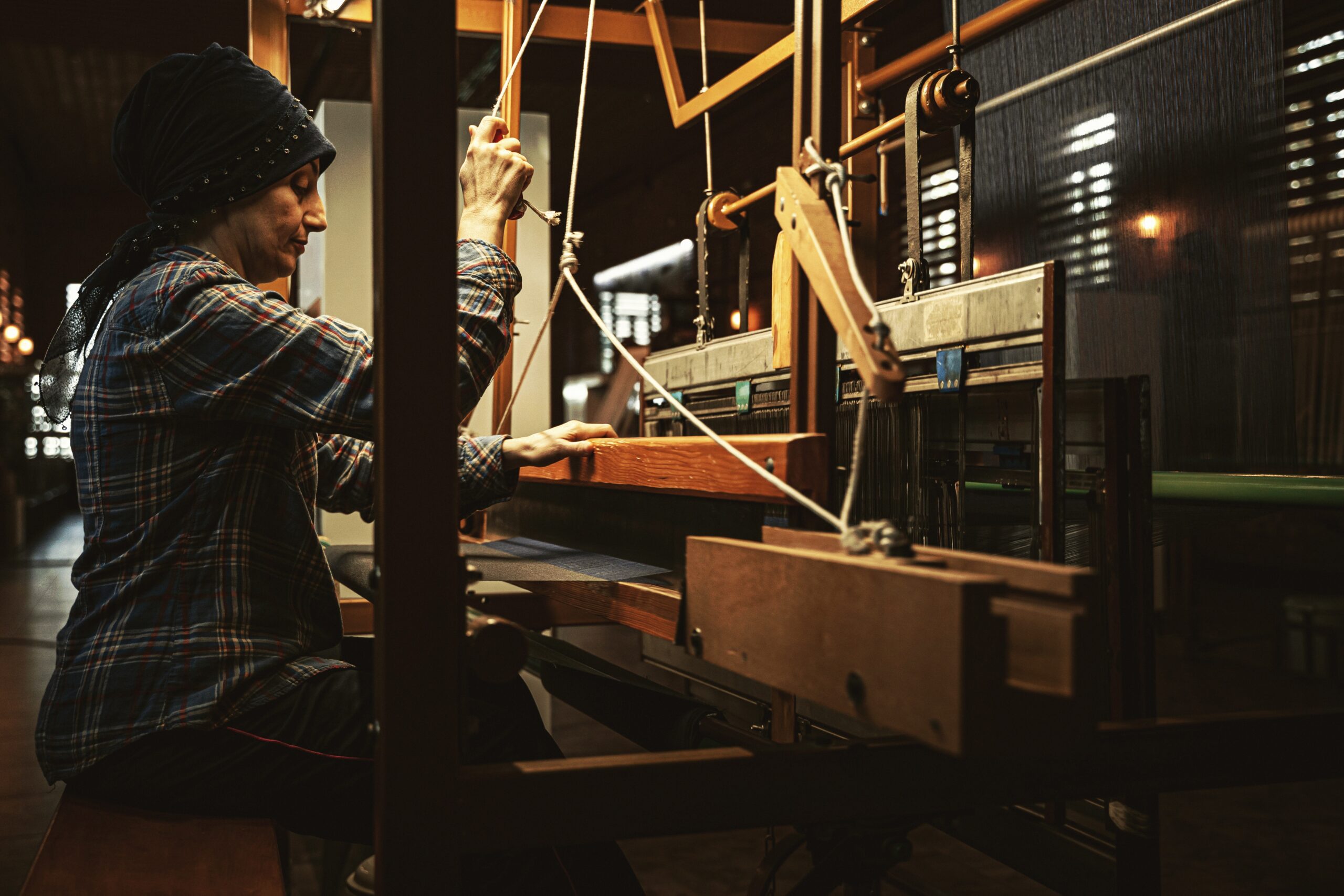
On the Isle of Lewis, on a morning when the light comes in low and grey off the Atlantic, a woman sits down at a loom that is older than she is and begins to work.
The loom is a Hattersley. Cast iron, foot-pedalled, loud in the particular way that only something mechanical and purposeful is loud — not noise exactly, but presence. The yarn has already been dyed and spun at the mill in Stornoway. A lorry delivered it this morning, as it does every morning except Sunday. Before she can weave a single thread, she must tie 1,400 warp threads into the loom by hand. This takes time. She knows how to make it take less time than it used to. She does it anyway.
What comes off this loom, eventually, after the weaving and the returning to the mill and the inspector’s examination and the stamping of the Orb — the oldest trademark in the country, registered in 1910 — is Harris Tweed. The cloth that has to be made from pure virgin wool and handwoven in the home of the weaver in the Outer Hebrides, by law, or it is not Harris Tweed at all. Not similar to. Not inspired by. Not made from the same wool in a factory on the mainland.
It has to be here. In this house. On this loom. By this woman.
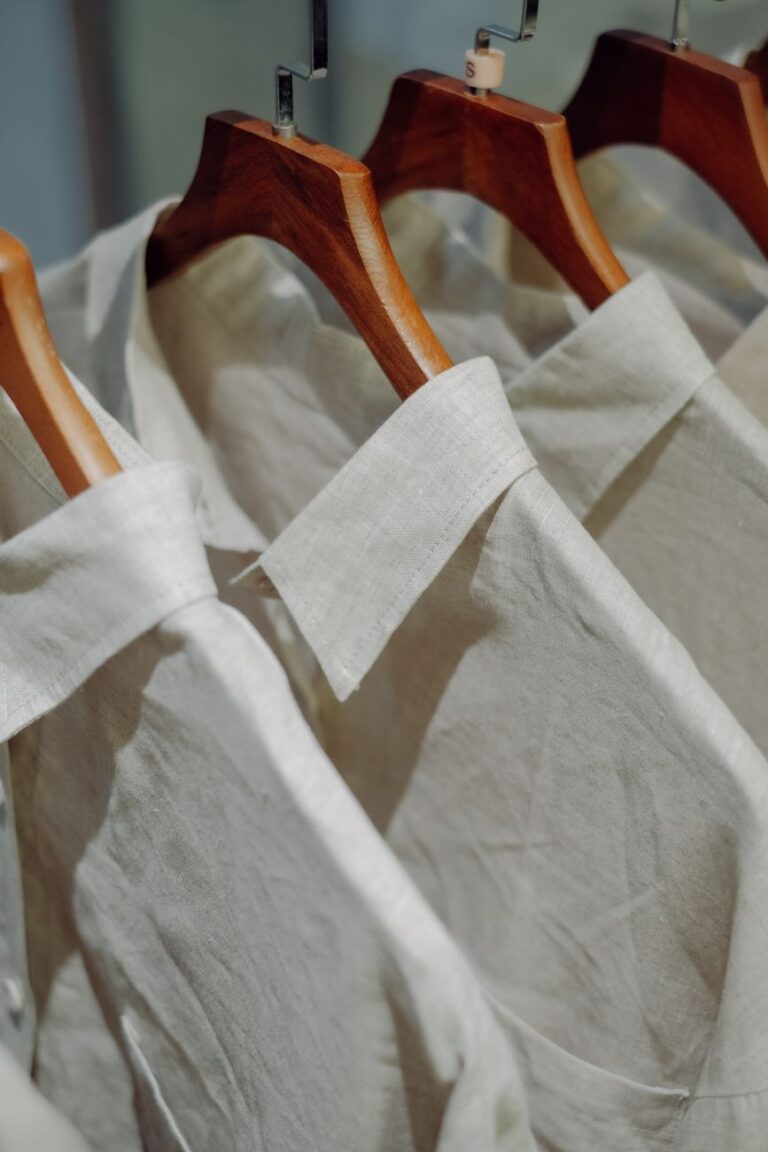
Most people who have worn Harris Tweed have no idea where it came from. They know the cloth — the weight of it, the particular warmth that no synthetic has ever convincingly replicated, the way it holds a color differently from anything else, slightly muted, slightly aged, as if it has already lived in the world for a while before it arrived on your shoulders. They know the Orb mark, if they know to look for it. They know the name.
They do not know about the warp threads. They do not know about the lorry on Sunday mornings. And they almost certainly do not know about the waulking songs.
Before a single thread of Harris Tweed reached a shop floor, it passed through the hands of women who sang to it. The songs were not decoration. They were the process itself. Waulking was the final stage of making the cloth — the most physical, the most communal, the most distinctly female part of the whole enterprise. Once the weaver had finished at the loom, the cloth was stiff, rough, and completely unwearable. It needed to be pounded and stretched and worked down to the correct weight and texture. Six to twelve women would gather around a long wooden table, lay the wet soapy cloth along it, and pass it rhythmically from hand to hand, beating and kneading with each pass, for hours. The work was exhausting. The songs were what made it possible — call and response, passed around the table the same way the cloth was passed, keeping the rhythm, keeping the hands moving, keeping the women together in the work.
The songs have names. They have been sung for centuries. Some of them are still sung today, at community gatherings and folk festivals across the Hebrides, not as museum pieces but as living music, with the same energy they always had.
The cloth endures. The songs endure. The women who made both are less remembered than either.
Marion Campbell of Plocrapol is one of the rare exceptions. She single-handedly oversaw the entire process — from rearing the sheep that provided the wool all the way through to creating the final tweed length. She became an icon not because she sought recognition but because the completeness of what she did made recognition unavoidable. Her loom has been preserved. Photographs of her at work are displayed in exhibitions. Her granddaughter Catherine now sits at a Hattersley loom of her own, carrying the lineage forward in the specific way that only a craft transmitted through family can be carried — not as instruction but as inheritance.
There is also Miriam Hamilton, twenty-seven years old, working in her loch-side workshop on the Isle of Lewis over a loom that is eighty years old. The loom is older than her parents. It belonged to someone before her. It will likely belong to someone after her. She is the middle of a sentence that started long before she arrived and will continue after she is gone. She bends over it every morning and begins.
Harris Tweed became what it is because of a protection it has almost never had to invoke, because the protection itself has been enough. To bear the Harris Tweed name, the cloth must be made from pure virgin wool and handwoven in the home of the weaver in the Outer Hebrides. Every stage of production must take place on the islands. This is not a marketing claim. It is law, enshrined by Act of Parliament in 1993, enforced by the Harris Tweed Authority and the Orb trademark that an inspector stamps onto every authenticated metre.
The inspector comes to the mill. He does not come to the house. He does not see the 1,400 warp threads tied by hand. He does not hear the loom. He does not know, when he stamps the Orb, what the morning looked like when the yarn arrived, or how long the woman sat before she began, or what she was thinking about as the cloth came off the beam.
He stamps what he can verify. The rest — the part that actually makes the cloth what it is — belongs to her.
There is a particular quality to a fabric that has been made this way. It is not something you can put in a specification or replicate with better machinery. It is the accumulated effect of thousands of small decisions made by a person who learned to make them from a person who learned to make them from a person who sat at a table seventy years ago and sang while she worked.
You feel it when you pick the cloth up. The weight is honest — not heavy, not light, exactly what it should be. The color is muted in the way that only natural dye on natural fiber achieves. The weave is not perfectly regular. It is almost perfectly regular, which is a completely different thing, and the difference is the woman’s hands.
A bolt of Harris Tweed arrives at a tailor’s table having passed through more hands, more mornings, more acts of quiet attention than almost any other cloth available in the world. The tailor who cuts it knows this, even when the client does not. The suit that is eventually made from it carries all of that — invisibly, in the weight and the drape and the particular way it holds its shape across a winter.
Somewhere on the Isle of Lewis, in a house by the water, the loom is running.
Marlowe.