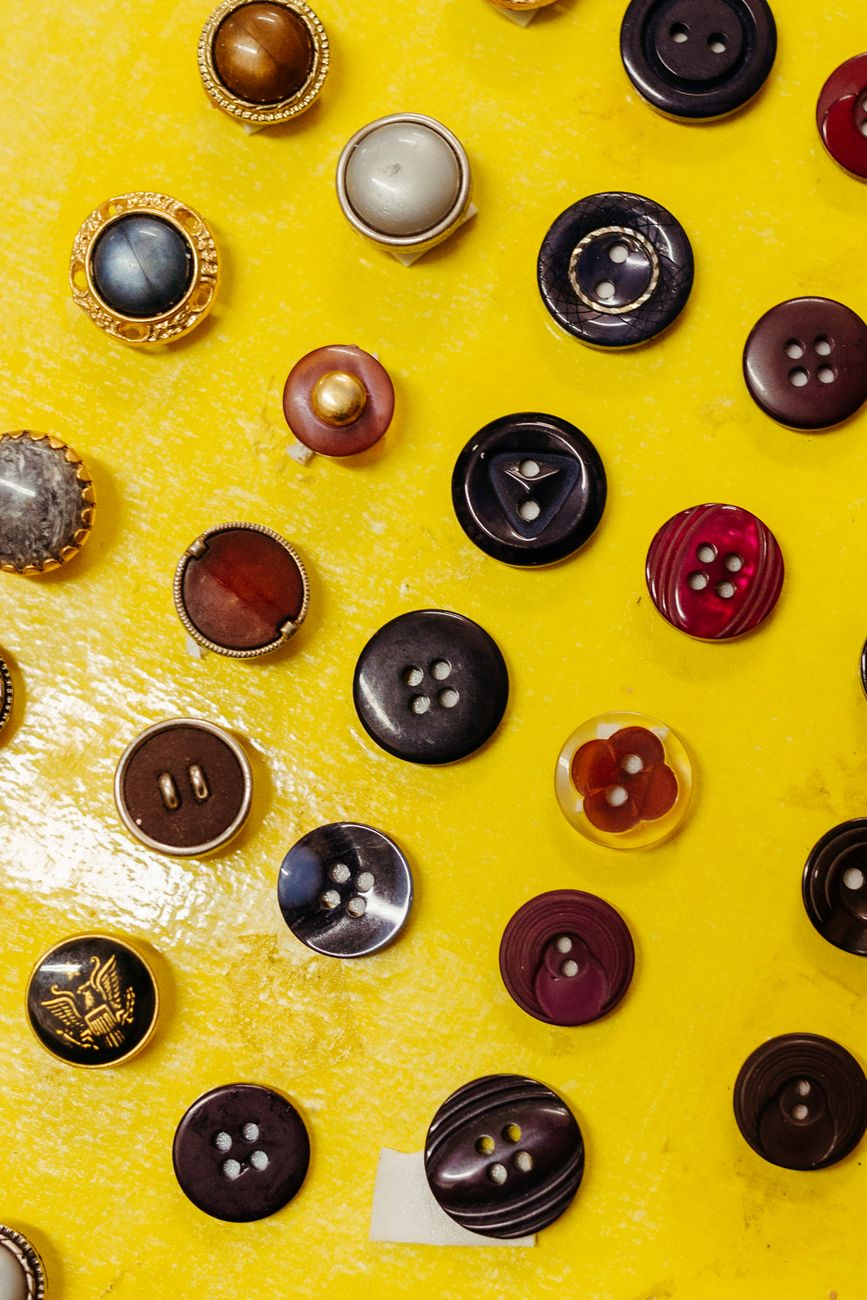
Vegetable Ivory
(5 Minutes)
In the lowland forests of coastal Ecuador, there is a palm that never needs to be climbed.
It isn’t tall. Its trunk is short and thick, marked by the scars of old leaves, and its fronds open wide enough to shade a small room. Among them hang heavy, spiny clusters of fruit, each one the size of a person’s head. When the fruit is ready, it falls. Nobody shakes the tree or cuts anything down. The palm lets go when it’s ready, and the people who live nearby gather what it gives them from the ground.
Inside each fruit are seeds about the size of a hen’s egg. Freshly opened, they hold something unexpected: a milky liquid, sweet and drinkable, much like the water inside a young coconut. If you had only seen the seed at this stage, you would never guess what it is about to become.
They are laid out to dry under the sun, sometimes for a month and sometimes for three. Slowly the milk thickens. Then it sets. By the end it has hardened into something dense, cream-coloured and smooth, so close to elephant ivory that even under a microscope the structures resemble each other. Long before anyone made buttons from it, botanists named the tree Phytelephas: the elephant plant.
In English it’s called vegetable ivory. Ecuadorians call it tagua. In a button workshop in Italy, where much of it ends up, it’s called corozo.
The trade began in the 1860s, when German importers realised what these seeds could become. Within a few decades tagua was one of Ecuador’s principal exports, alongside cacao and rubber. At the northern port of Esmeraldas, there were years when it made up most of what left the harbour. The seeds were cut into thin discs called blanks and shipped across the Atlantic to workshops that finished them into buttons.
By the 1920s, roughly one in every five buttons made in the United States came from this palm. Coats, trousers and work shirts were all fastened with a seed that had once been milk on a forest floor in Ecuador. Almost nobody wearing them knew.
Then plastic arrived. It was cheaper and faster, and it could be poured into any shape in any quantity. The trade that had lasted the better part of a century collapsed within a generation. In the 1940s it came briefly back to life. With plastics scarce in wartime, the US Army ordered more than two and a half million tagua buttons. They were tested against heat, pressure and repeated washing, and they held up on all counts. When the war ended, the orders ended too. The palms were left standing in cattle pastures, and their fruit fell to a ground where fewer and fewer people bothered to collect it.
Corozo never disappeared completely. It survived where people still cared about the parts of a garment no one looks at: a good overcoat, a pair of trousers built to last, a workshop in Italy finishing buttons the way it always had.
The reason is something you feel rather than see. A corozo button is cool when you first touch it, then slowly takes on the warmth of your hand. It has weight without being heavy. When it’s dyed, the colour only sinks into the surface, so the grain of the seed shows through faintly underneath, and no two buttons are ever quite alike. Plastic is identical by design. Corozo can’t be.
Very few people would notice the difference across a room. You notice it every morning, without thinking about it, with your thumb.
There’s a particular kind of patience in this material. The palm takes up to fifteen years to mature, and then it can go on producing for close to a century. Its seeds are left to turn from liquid to stone in their own time. Nobody hurries the drying, because a seed dried too fast cracks.
Little in modern clothing is allowed to take that long. Most buttons are chosen by price per thousand and sewn on without anyone giving them a second thought. They are the smallest part of a garment and the one that gets handled the most. You touch your buttons more often than any other part of what you wear, perhaps a dozen times a day, in the dark, in a hurry, without looking.
That may be exactly why they matter. The details nobody else notices are the ones you live with most closely. A button made from a seed that was once milk and is now something close to ivory won’t change how a garment looks from across the room. It changes how the garment feels in your hand. Nothing more, and nothing less.
The palm lets go when the fruit is ready. Everything after that is just a matter of waiting.
Marlowe